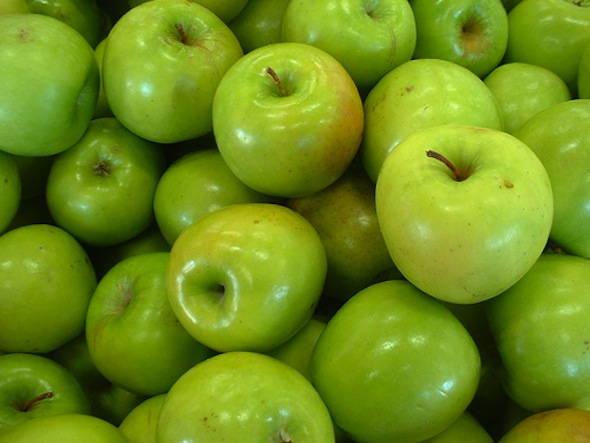
They did it! They have finally created an apple that doesn’t get brown when sliced and exposed to air. Yep — you guessed it — the first genetically modified fruit called the Arctic Apple. I’ve been waiting years for this — haven’t you?
Here is yet another food item that is at risk for contamination by the food industry. If it weren’t bad enough that apples are already the number one “dirty” food, due to the over 14 different pesticide residues found on them — now there will be another concern about apples — that they are genetically modified.
But the kicker is that this genetic modification is not even for pest or drought resistance (reasons given to use genetic engineering) — no this genetic modification is for the natural browning that occurs when the flesh is exposed to air. Don’t they know that a little lemon juice takes care of that minor inconvenience?
Playing with genes
It’s almost as if these companies are just playing with genes because they are there. It’s a “let’s see what happens when we do this” attitude. Apparently they do not care about the unknown risks and factors in genetic modification and the consequences.
U.S. Apple Association is opposed
Interestingly, the U.S. Apple Association is opposed to this product — not because they believe genetic modification is dangerous, but because they feel it would tarnish the apple’s image of a natural and healthy food.
We don’t think it’s in the best interest of the apple industry of the United States to have that product in the marketplace at this time,
said Christian Schlect, president of the Northwest Horticultural Council, which represents the tree-fruit industry in and around Washington State. The state of Washington produces about 60 percent of the nation’s apples.
Okanagan Specialty Fruits
The company is Okanagan Specialty Fruits. The company says the nonbrowning apple could improve industry sales by becoming popular with consumers and food service companies in part by making sliced apples more attractive to serve or sell.
If that is not the most ridiculous and frivolous statement I’ve heard lately, I don’t know what is. Can you imagine actually studying this “problem” with a straight face?
Others are concerned that since this GM apple will not show browning, how will the consumer know if the apple is not actually rotten?
According to the company website, they have
silenced the gene sequence that controls the production of polyphenol oxidase (PPO), which initiates enzymatic browning in apples. Enzymatic browning (a.k.a. primary browning) occurs when an apple’s cells are damaged, such as through cutting, bruising or biting the fruit. For example, if someone were to grip an apple a bit too hard while picking it, there might be no signs of damage at first, but the slightly damaged cells on the apple’s fresh surface will brown due to this enzymatic reaction.
Granny Smith apples are the first to go
The first apples targeted are the granny smith variety. They are also gearing up for sales of “variety specific” apple juice of various colors — not brown. The implications of using this genetically modified apple in apple juice is seriously frightening because of the widespread use of apple juice, especially for children.
Additionally, most apple juice comes from concentrate mixtures of apples of many different origins. Furthermore, as things stand now, it will not be labeled.
Scientists familiar with genetic engineering have stated that genetic modification changes the genes and the cell in ways that are unpredictable. This translates into having unlabeled items in the food supply that may have unforeseen and long term health consequences that can be serious, severe and even fatal.
But who cares? As long as my apples don’t get brown I’m OK!
Click here to help by telling the USDA what you think about eating rotten apples!
This comment period will close on September 11, 2012 so get your voice heard now!
This post is shared at : Freaky Friday, Country Homemaker Hop. Fight Back Friday, Foodie Friday, Traditional Tuesday, Tasty Tuesday Naptime, Hearth & Soul Hop, Tasty Tuesday 33, Whole Foods Wednesday, Real Food Wednesday, Sustainable Ways, Allergy Free Wednesday, Mommy Club, Healthy 2Day, Creative Juice Thursday, Full Plate Thursday, Keep it Real Thursday , Simple Lives Thursday, Eat Make Grow, Pennywise Platter
Photo Credit