


(37) comments
Add Your Reply
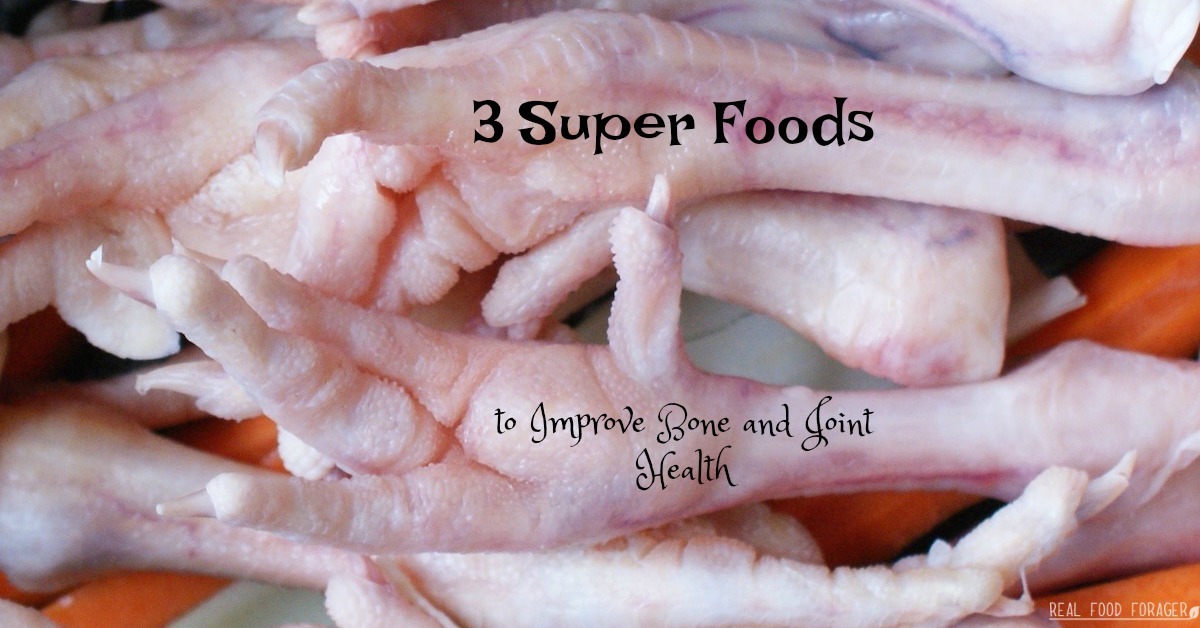
Many people ask for advice on natural ways to improve their bone and joint health. Here are 3 super foods to improve bone and joint health which have collagen and gelatin.
They ask about expensive supplements like glucosamine and chondroitin and minerals like calcium, magnesium and zinc for bone and joint health.
My answer usually explains that you can take all the supplements you want but you may not be absorbing much of it. Here are 3 super foods to improve bone and joint health, which will also relieve pain and support gut health.
Traditional cultures the world over have included bone broth in their daily diets. Perhaps your grandmother knew that “good broth will resurrect the dead,” (a South American proverb). But in our fast paced society today the art of making good bone broth has been largely forgotten and the numerous health benefits sacrificed.
I remember my mother making chicken soup with a freshly slaughtered chicken from the local butcher with all the organs and the feet. The feet are essential for a broth that will have a lot of collagen and gelatin. Homemade broth is full of the amino acids necessary for collagen production; proline, glycine and hydroxyproline. My broth never gelled until I was able to use the feet. Don’t worry, the feet are scalded and peeled at the abatoir so they are very clean.
Boullion is Made With The Neurotoxin MSG
Homemade broth has been replaced with boullion — perhaps the worst item in the market as it is full of sodium and MSG. After WW 11, dehydrated soup mixes, sauce mixes, and condiments were introduced when the food industry figured out how to hydrolyze proteins to a base containing free glutamic acid (MSG) a neurotoxin.
More recently available are tetra pak containers of “organic” broth but these also have added MSG and “natural flavorings” which are a negative. Additionally, they are certainly not cooked in the traditional way to gently extract the minerals, collagen and gelatin from real bones. These store bought stocks and mixes have very little nutritional value.
Collagen is the single most abundant protein in the animal kingdom. Made from proline, glycine and hydroxyproline these amino acids are abundant in the cartilage, bone and the skin of animals and fish. Biochemically, there are several different types of collagen which appear in different types of tissue from bone, tendon and ligament to mucous membranes throughout the body including the intestinal tract and the cornea of the eye.
In order for the body to make collagen from these basic building blocks, the amino acids have to be hydroxylated– simply put, water is added. With one exception, all types of collagen are triple helixes, which makes them very strong fibers. Type IV can be a flatter shape depending upon the sequence of amino acids in it’s formation.
All of these processes require vitamin C as an enzyme cofactor. That is why the disease scurvy — a deficiency of vitamin C will affect all collagen tissue whether it is in the skin, bones, joints or gums. The wrinkled skin of people who are long time smokers reflects the deficiency of vitamin C and it’s effect on collagen as smoking breaks vitamin C down.
Gelatin is derived from collagen. It is the protein portion of collagen. Commercially it is used for a variety of ways in the food, pharmaceutical and even the paper industry. Gelatin may be obtained as a processed food item for use in home cooking.
The most obvious place to get collagen and gelatin — so necessary for human bone, joint and membrane health — is from the bones, joint and skin tissue of animals. Learning how to make homemade stock is critical for good health. It can be included at least once a day as a small bowl or cup of broth or it can be made in to a more complex soup or gravy. Once you get over the learning curve it is simple.
1 – Chicken stock made from the bones and leftovers of a chicken dinner. Roast a chicken (preferable pastured) and put all the leftover bones, skin, feet (and even the head if you can get it) into a crock pot with vegetables and water and simmer overnight on low. Strain and store in jars in the refrigerator for 5 -7 days and freeze the rest.
2 – Beef or lamb bones can be used — preferable knuckle bones and marrow bones. Bones are cheaply and easily obtained from your local farmer or butcher.
3 – Fish stock can be made from one large fish carcass. A fish carcass is cheaply and easily obtained from the fish monger.
You can get all three recipes from Sally Fallon-Morell for chicken stock, beef stock and fish stock here.
Here are my recipes for Roast Chicken and Broth, Beef Broth and Chicken Feet Broth.
The difference between a stock and a broth is that the stock is made with the bones as well as vegetables and meat while the broth is only made with the meat and vegetables.
Stock or bone broth make the most nutrient dense broths as they are filled with collagen and gelatin as well as minerals which are easier to absorb and made even easier to absorb if some fat is added to the broth in the form of cream. These bone broths are essential for people recovering from leaky gut or intestinal dysbiosis and play a large role in the GAPS diet. If you don’t have access to chicken feet you may add some high quality gelatin to the broth.
Where to buy high quality colagen peptides for soups, sauces and gelatin for jello.
Where to buy bone broth made from the Nourishing Traditions recipe.
References:
Are you as fascinated by the microbiome as I am? Are you hoping for a cure through this new research explosion?
Learn how to make bone broth and soups full of collagen and gelatin in my ebook Beyond Broth – on sale today!
Check out my newest ebook, Heal Your Microbiome Optimize Your Health – on sale today!

Inspire Your Real Food Healing Journey with my FREE Grain-Free Meals e-Cookbook and Getting Started email series and newsletter! Unsubscribe anytime. Privacy Policy

