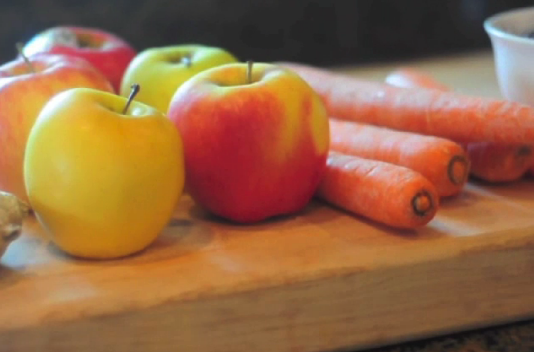
I am so excited to show you this video of Jenny from Nourished Kitchen making fruit chutney. It is from her awesome class, Get Cultured! How to Ferment Anything. The class is on sale right now through May 22. If you want to start to introduce cultured foods to your family, the most economical way is to make them yourself. Jenny makes it very easy to learn with over 50 video tutorials and over 100 recipes. You won’t have any doubts if you take this class.
Probiotic Apple, Carrot and Raisin Chutney
Ingredients
• 5 to 6 apples, peeled and chopped
• 5 to 6 carrots, peeled and chopped
• 1 2-inch knob ginger, peeled and minced
• 1 cup raisins
• starter culture (where to buy culture starter)
• 1 tablespoon ground cinnamon (where to buy organic spices)
• dash allspice
Equipment
• Mixing bowl
• Wooden spoon
• Sieve or strainer
• Food processor (where to buy a food processor)
• Mason jar
Method
1. Process apples, carrots and ginger in a food processor or by hand until finely minced.
2. Transfer apples, carrots and ginger to a mixing bowl and stir in starter culture, raisins, cinnamon and allspice.
3. Spoon chutney mixture into a mason jar or vegetable fermenter and mash down with each layer so that the fruit and vegetables release their juices to form a liquid medium in which beneficial bacteria can proliferate.
4. Continue pressing the chutney mixture down with a wooden spoon or dowel until the liquid covers the vegetable and fruit solids. If it does not, spoon additional starter culture over the vegetable and fruit chutney until it does, leaving at least one-inch headspace in your jar.
5. Cover and allow it to ferment for two to three days at room temperature. Transfer to cold storage. The chutney should keep, refrigerated, for six to eight weeks.
Options for starter:
Kefir Starter Culture can be used, dissolve 1/2 package into 1/4 cup plus two tablespoons warm water.
Fresh whey can be used as a starter for this recipe. Use 1/4 cup plus two tablespoons.
Difficulty: easy
Yield: 1 qt
Time: 5 minutes (active), 2 to 3 days (fermentation)
Keep your family healthy
The best way to reinoculate ourselves with beneficial bacteria is to eat cultured foods. Learn how to culture anything! From the most common yogurt to more esoteric brining of vegetables, salsa, chutneys and condiments — most foods can be fermented — their shelf live lengthened without chemical preservatives, and most importantly, the beneficial bacteria is created.
By eating cultured foods on a daily basis you are building up the colonies of good bacteria that do so much for us and you are protecting yourself from the pathogens created by our dangerous food supply.
Register for Get Cultured! How to Culture Anything
Jenny from Nourished Kitchen is offering a $50.00 off coupon code, in addition to the sale, that is good through May 22.
- Original price:
$197.00 - Sale price:
$147.00 - Price with coupon: $97.00 — less than $7.50 per class!
Use code SAUERKRAUT at check out for the $50.00 discount.
Act now! — If you order today you will also receive the e-book Get Cultured! Probiotic Recipes from Nourished Kitchen.
Click here to find out more about the class and to register
Join Jenny in a Webinar about this class!
Click here to Register for the Webinar for this class
The Webinar will be held Friday May 18 at 1:00 – 2:00 PM Eastern Standard Time
Join traditional foods and fermentation educator Jenny McGruther of NourishedKitchen.com for an in-depth webinar covering safe, effective and practical tips for fermentation. Participants will learn how to choose fermentation equipment for all budgets, how to ensure ferments are safe, how to minimize contamination from stray microbes, as well as learn how ferments can be integrated into daily meals.
The Webinar has limited spots so don’t wait to register for that. You will get a good idea about what the class is like from the webinar.
Register here for the Free Webinar.
If you do not have the time or desire to learn this art, we have a great supplier of fermented vegetables and juices here.
This post is shared at: Sugar Free Sunday, My Meatless Monday, Monday Mania, Melt in mouth Monday, Meatless Monday, Homestead Barnhop, Real Food 101, Slightly Indulgent Tuesday, Tasty Tuesday Naptime, Traditional Tuesday, Hearth & Soul Hop, Tasty Tuesday 33, Mommy Club, Healthy 2Day, Gluten Free Wednesday, Real Food Wednesday, Sustainable Ways, Whole Food Wednesday, Allergy FreeWednesday, Whole Foods Wednesday, Full Plate Thursday, Tastastic, Simple Lives Thursday, Fresh Bites Friday, Freaky Friday, Country Homemaker Hop, Foodie Friday, Fight Back Friday, Friday Food, LHITS Linky, Seasonal Celebration
Video and photo Credit: Nourished Kitchen